Alma Living Bologna

Almagazine

Tourism: a record year for Bologna

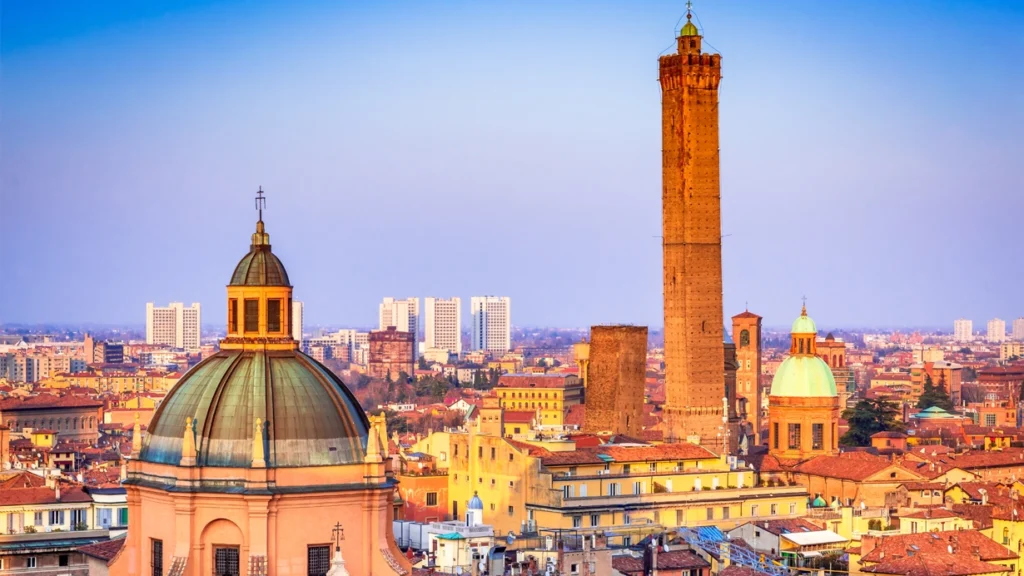
Tourism: a record year for Bologna, with over two million arrivals in 2025. The IRES Emilia-Romagna Observatory captures the boom in urban tourism: the regional capital is leading the region’s growth, while holiday destinations are shifting. 1 June 2026 | 8 min read The IRES Emilia-Romagna Observatory captures the boom in urban tourism: the regional capital is leading the region’s growth, while holiday destinations are shiftingBologna closed 2025 with an unprecedented figure: over 2.27 million tourist arrivals (+11.3% on 2024), a number that, for the first time, puts it in first place among Emilia-Romagna’s municipalities for arrivals, ahead of Rimini itself. It is the clearest sign of a transformation that the Observatory of the Economy and Labour in Emilia-Romagna, run by IRES, describes in no uncertain terms: urban tourism has become the main driver of growth in the sector, while more traditional models – seaside and spa tourism – are showing signs of strain. It should be noted that Bologna’s lead concerns arrivals, i.e. the number of tourists who spent at least one night in the city, and not total overnight stays: on this front Rimini remains ahead, thanks to the longer average stay typical of seaside tourism. There is also a statistical change to consider: from 2025, regional data include for the first time “other private accommodation” not run on a business basis, a segment in which Bologna is particularly strong thanks to the spread of short-term rentals. That said, the city’s growth remains solid even on a like-for-like basis: overnight stays rose by 9.2% compared to 2024, a much faster pace than Rimini’s (+1.2%). A record 2025 for the whole of Emilia-Romagna Bologna’s result is part of an exceptional year for the entire region. In 2025 Emilia-Romagna passed the threshold of 13 million arrivals for the first time (13,231,732, +11.4% on 2024) and 44 million overnight stays (44,170,468, +8.3%). This growth is driven above all by international visitors, who recorded +16.7% in arrivals and +15.4% in overnight stays, now accounting for almost a third of the total (31.5% of arrivals and 31.9% of overnight stays).Compared with 2019 – already considered a positive benchmark for regional tourism – arrivals are up 14.1%, rising to as much as 33.6% for international visitors alone. Among the fastest-growing nationalities are Germany, France, Switzerland, Poland, Romania and above all the United States, whose arrivals increased by 79.3% compared to 2019. Bucking the trend, however, are the collapse in Russian tourists (-81% in arrivals) and the sharp fall in Chinese visitors (-46.8%), who in 2019 were the third-largest foreign market by arrivals and now rank eleventh. Cities of art on the rise, coast and spas struggling Bologna overtaking Rimini is not an isolated event, but the clearest sign of a broader redistribution of tourist flows across the region, described by the Observatory as a genuine “advance of tourism in cities and nature”, while coastal tourism is “facing greater difficulties”. In terms of overnight stays, growth compared to 2019 particularly rewards the cities of art: in addition to Bologna (+42.9%), Modena (+26.2%), Piacenza (+18.9%) and Ferrara (+10.3%) stand out. Conversely, Rimini recorded a 4.3% drop compared to 2019, and among seaside resorts Bellaria-Igea Marina and Gatteo also saw fewer overnight stays. The spa sector, with the exception of Castel San Pietro Terme (+9.6% in overnight stays on 2024), also continues to struggle: Bagno di Romagna lost 9.1% and Salsomaggiore 5.8%. Alongside this geographical redistribution, tourist flows are becoming progressively less seasonal: while in 2019 July and August accounted for 43.8% of annual overnight stays, in 2025 that share fell to 40%, benefiting mainly May, October and December. The picture across the metropolitan area Looking at the wider Metropolitan City of Bologna, 2025 brought arrivals to 3,171,453 (+10.7% on 2024) and overnight stays to 7,188,998 (+8.3%). The city of Bologna alone accounts for 71.6% of arrivals and 72.9% of overnight stays across the entire metropolitan area, confirming its role as the true engine of the sector.Far behind are Imola (3.4% of arrivals and 3.7% of overnight stays) and Castel San Pietro Terme (2% of arrivals). Among the municipalities closest to the city, significant positive changes – albeit on still marginal shares – were recorded in San Lazzaro di Savena, Zola Predosa, Castenaso, Calderara di Reno, Bentivoglio, Castel Maggiore and Casalecchio di Reno. The spa and mountain areas of the Bolognese Apennines are also growing again, although they remain marginal overall. As for the type of accommodation, hotels remain the most popular choice, with 68.8% of arrivals and 57.7% of total overnight stays. But it is the non-hotel segment that is growing fastest, driven in particular by rental accommodation run on a business basis: a category that went from 5,528 properties in 2019 to 11,532 in 2024 and 13,243 in 2025, a trend which, according to the Observatory, is still expanding. A new balance for regional tourism Overall, the data from the IRES Emilia-Romagna Observatory paint a picture of a sector in full transformation: having recovered and surpassed pre-pandemic levels, regional tourism now rests on different foundations than in the past, with the cities of art – and Bologna in particular – leading a growth that looks set to consolidate, while seaside and spa tourism are called upon to partly rethink their appeal. Source: Osservatorio dell’Economia e del Lavoro in Emilia-Romagna – “Il settore del turismo” (The Tourism Sector), IRES Emilia-Romagna, April 2026; Osservatorio sull’Economia e il Lavoro nella Città Metropolitana di Bologna no. 19, IRES Emilia-Romagna, June 2026.

Tourism: a record year for Bologna Read More »
T-Days in Bologna: Everything You Need to Know

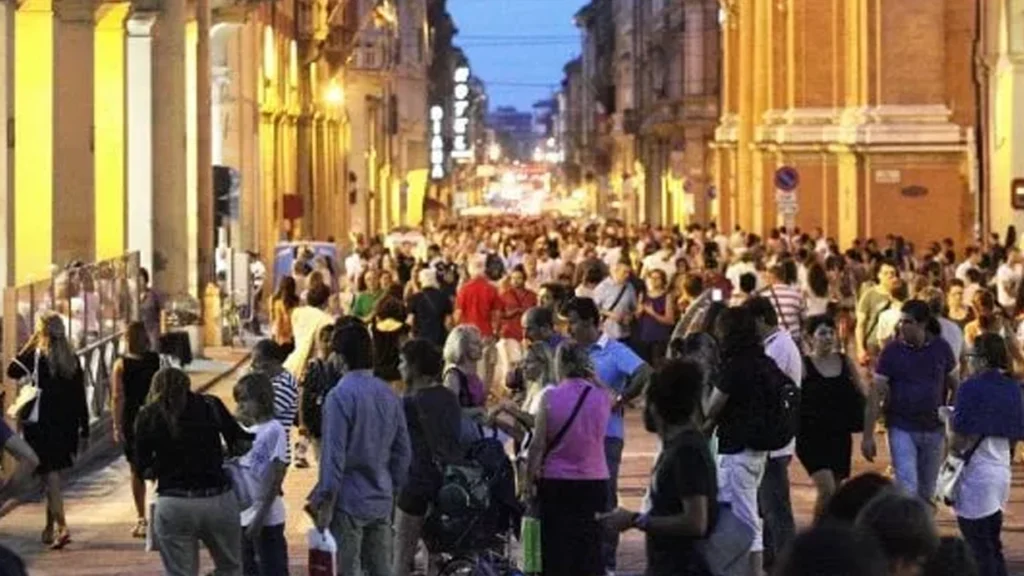
T-Days in Bologna: a guide for weekend visitors. Every Saturday, Sunday and public holiday, the heart of Bologna becomes a pedestrian zone. Here’s what it means for visitors to the city. 4 July 2026 | 8 min read Anyone arriving in Bologna at the weekend will find a different city from the one on weekdays: for two days, the historic centre becomes one large pedestrian area. This is the result of the T-Days, the permanent measure that every Saturday, Sunday and public holiday closes the so-called “T Zone” to traffic: the T-shaped junction formed by the two main streets of the historic centre. For visitors, this means one thing above all: more space, less traffic and a city that is easier to enjoy on foot. What the T-Days are The name comes from the very shape of the area involved: the “T” is formed by Via Rizzoli, Via Ugo Bassi and Via Indipendenza, the main streets that meet right in the heart of the city, just a few steps from the Two Towers, Piazza Maggiore and the Quadrilatero. From 8 AM on Saturday to 10 PM on Sunday, and on all public holidays from 8 AM to 10 PM, this area is reserved entirely for pedestrians and cyclists: no cars, no motorbikes, no buses. The pedestrian zone is not limited to the three main streets, but also extends to other streets in the centre: Via Caprarie, Via Calzolerie, Via dell’Archiginnasio, the east side of Piazza Maggiore and Piazza Re Enzo, Via de’ Falegnami and a stretch of Strada Maggiore, between the Two Towers and Piazza San Michele. The result is a large pedestrian area that effectively links some of Bologna’s most iconic places into one long walking route. Why the T-Days exist The T-Days are not an occasional event, but a structural choice by the city, made permanent after a trial period. The stated aim of the city council is to give back to residents and visitors one of the most important historic centres in Italy, reducing traffic on the busiest days and making it more pleasant to stroll, shop, visit museums or simply sit at an outdoor café without the noise and constant presence of cars. Over the years, the project has been accompanied by measures to improve accessibility: new cycle lanes, more car parks in the areas around the centre – with a total of over 4,500 parking spaces in the park-and-ride areas – and a free shuttle bus designed to connect the main public transport lines with the entrances to the pedestrian zone, with stops at the Two Towers, the Arena del Sole on Via Indipendenza and on Via Ugo Bassi. Particular attention is also paid to people with reduced mobility, with reserved parking areas in the streets next to the pedestrian zone. What to find in the T Zone at the weekend For those arriving in Bologna at the weekend, the pedestrianised T Zone is the ideal starting point for a visit. Walking along Via Rizzoli brings you straight to the Two Towers, then on to Piazza Maggiore and Piazza del Nettuno, the monumental heart of the city, home to Palazzo d’Accursio, the Basilica of San Petronio and Palazzo del Podestà. From here, a few steps take you to the Quadrilatero, the maze of narrow streets – Via Caprarie, Via Drapperie, Via Pescherie Vecchie – full of historic shops, food markets and taverns, once the seat of the ancient arts and crafts guilds. Pedestrian weekends are also often the occasion for a programme of cultural events, exhibitions and guided tours organised by the City and the civic museums, ranging from historical and archaeological guided tours – for example of the collections of the Archiginnasio Library or the Civic Archaeological Museum – to workshops for families and children and temporary exhibitions in the museums of the city centre. The full programme, updated week by week, is published on the City of Bologna and Bologna Welcome websites, and is the easiest way to find out what’s on during the weekend of your visit. Practical tips for visitors If you are arriving by car, bear in mind that during the T-Days you will not be able to drive into the T Zone: the easiest solution is to leave your car in one of the park-and-ride car parks on the edge of the historic centre and reach the heart of the city on foot, by bike or on the dedicated shuttle. If you are arriving by train at Bologna Centrale, you will also find it easy to get around on foot or by public transport: Bologna’s historic centre is compact, and most of the main attractions are just a few minutes’ walk away. Remember too that the T Zone is pedestrianised not only at weekends, but also on midweek public holidays: if you are planning a visit to Bologna over a long weekend or a national holiday, you will find the same scene as on a Saturday or Sunday, with the historic centre free of traffic and fully enjoyable on foot. In short, for anyone visiting Bologna at the weekend, the T-Days are an added bonus rather than a restriction: they mean strolling carefree between the Two Towers, Piazza Maggiore and the Quadrilatero, enjoying the UNESCO-listed porticoes without car traffic, and perhaps coming across one of the many cultural and food events that bring the historic centre to life on its busiest tourist days. Sources: City of Bologna – “Zona T e T Days” and “T Days, le novità per una migliore accessibilità”; Bologna Welcome – “T Days every weekend and public holidays”.

T-Days in Bologna: Everything You Need to Know Read More »

Summer 2026 Program

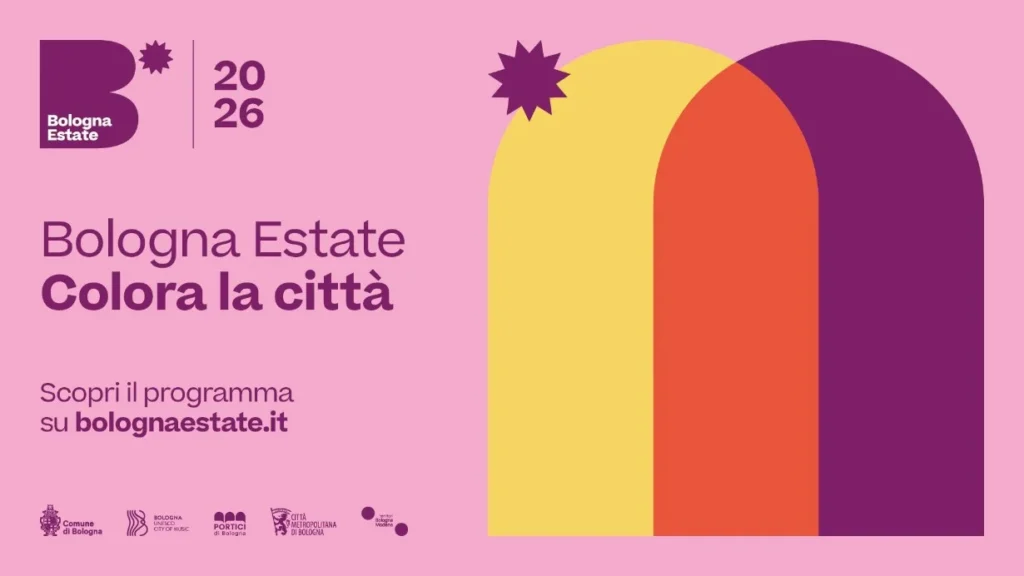
Bologna Estate 2026: un cartellone da record tra musica, droni e Napoleone. Dal 15 maggio al 27 settembre, 424 progetti tra centro e periferie. Il filo conduttore è il colore, ispirato ai portici Patrimonio Unesco. 13 Maggio 2026 | 8 min di lettura  Anche il 2026 sarà un’estate ricchissima per Bologna. Bologna Estate, il contenitore che ogni anno raccoglie centinaia di iniziative culturali, musicali e di intrattenimento in città e in periferia, parte il 15 maggio e si protrarrà fino al 27 settembre, con 424 progetti complessivi, dei quali 218 nel capoluogo e 206 distribuiti negli altri comuni dell’area metropolitana, prevalentemente a ingresso gratuito. La campagna promozionale di questa edizione è costruita attorno al tema del colore, in dialogo con uno degli elementi architettonici più identitari della città: il portico, da cinque anni Patrimonio dell’Umanità Unesco. Bologna Portici Festival apre la stagione. A dare ufficialmente il via all’estate di piazza Maggiore e delle altre piazze cittadine è, dal 4 al 7 giugno, il Bologna Portici Festival, in un’edizione speciale che celebra due anniversari importanti: il ventennale di Bologna Città Creativa della Musica Unesco e i cinque anni dal riconoscimento dei portici come Patrimonio Unesco dell’umanità.Tra gli ospiti sul palco di piazza Maggiore, il 6 giugno arriva Luciano Ligabue per presentare il suo libro “Fuori e dentro il borgo”, a trent’anni dalla pubblicazione, mentre il 7 giugno è in programma il concerto di apertura del Festival Respighi Bologna, con l’Orchestra del Conservatorio diretta da Aldo Sisillo e la partecipazione della pianista Gloria Campaner. In piazza della Pace torna il villaggio dedicato alla cultura popolare, con appuntamenti legati al ballo filuzziano e l’avvio di Bulåggna Sound, la nuova sfida della canzone dialettale. Non manca un omaggio letterario alla città: nelle mattinate del 5 e 6 giugno, al Bar Billi, prendono vita a sorpresa i personaggi di Stefano Benni con le “Chiacchiere da Bar Sport”. I nuovi luoghi dell’estate. Una delle caratteristiche di questa edizione è la riscoperta di spazi cittadini finora poco accessibili. In pieno centro storico, Mezz’aria alla ex Caserma Boldrini in via Frassinago e TEST a Villa Turri in viale Carducci trasformano due ex aree militari in luoghi aperti dedicati a creatività, laboratori e socialità. L’ex Chiesa di San Nicolò in via San Felice ospita invece la rassegna multidisciplinare Rione San Nicolò, orientata alla rigenerazione urbana.Una novità importante riguarda anche il cinema all’aperto: l’Ippodromo di Bologna accoglie quest’anno la programmazione dell’Arena Puccini, che lascia temporaneamente la storica sede del DLF per i lavori di restauro. Una delle arene estive più partecipate d’Italia allestisce un grande schermo per mille spettatori e apre il 12 giugno – fino al 10 settembre – con “Febbre da cavallo” di Steno, il cult del 1976 con Gigi Proietti.Tra le altre novità, dal 15 al 24 maggio gli spazi delle Popolarissime tra via dello Scalo e via Malvasia diventano un palcoscenico a cielo aperto con BAUCI – Circo delle Città Invisibili, un percorso di circo contemporaneo ispirato a Italo Calvino. La Biblioteca Tassinari Clò resta aperta come palcoscenico letterario fino a mezzanotte, mentre nel parco di Villa Spada, ogni mercoledì sera dal 20 maggio al 29 luglio, apre fino alle 24 un’area studio all’aperto pensata anche per gli studenti universitari in sessione d’esami, accompagnata dal ciclo di presentazioni “Metti una sera in biblioteca”.Da segnalare anche TICO, l’officina mobile della conoscenza promossa dal Comune con Fondazione IU Rusconi Ghigi, Fondazione Golinelli e TPER: dal 14 al 21 maggio un laboratorio itinerante su ruote porta nei quartieri attività gratuite di robotica, coding, intelligenza artificiale, stampa 3D e clima rivolte a bambini e adolescenti. Droni, country life e cinema sotto le stelle. Tra le novità più spettacolari c’è quella firmata BolognaFiere: sabato 20 giugno, all’Arena Joe Strummer del Parco Nord, il DroneArt Show trasforma il cielo sopra Bologna in un palcoscenico vivente, con centinaia di droni illuminati che danzano sulle note di capolavori classici eseguiti dal vivo da un quartetto d’archi. Dal 26 al 28 giugno arriva invece la Bologna Country Fair, dedicata al mondo equestre e allo stile di vita “country life”.Confermato uno dei riti più amati dell’estate bolognese: il cinema sotto le stelle in piazza Maggiore, dal 15 giugno tutte le sere fino al 14 agosto, quando la chiusura coincide con il tradizionale ballo della Filuzzi in piazza e la finalissima del contest Bulåggna Sound. In questo contesto si inserisce anche la 40ª edizione del festival Il Cinema Ritrovato della Cineteca di Bologna, in programma dal 20 al 28 giugno, che si apre sabato 20 con il cine-concerto di “Aurora” di Friedrich Wilhelm Murnau, accompagnato dall’Orchestra del Teatro Comunale diretta da Timothy Brock. Sempre in piazza Maggiore trova spazio anche “Curses of the Witch” (1929) del finlandese Teuvo Puro, con l’accompagnamento sonoro del gruppo Cleaning Women.Dal 5 al 15 giugno Bologna ospita la 22ª edizione di Biografilm Festival, dedicato al racconto biografico, tra il Cinema Modernissimo e le sale storiche della città. Il grande schermo arriva anche nei quartieri periferici grazie alla rassegna “Si Gira!”, che dal 18 agosto al 6 settembre propone diciotto serate di cinema itinerante, con le novità del Velodromo e della Lunetta Gamberini oltre alla conferma del Giardino delle Popolarissime. Un’estate di musica, tra centro e periferie. Il programma musicale dell’estate bolognese è particolarmente fitto. Tra giugno e luglio, i palchi di Sequoie Music Park, Oltre Festival e Bonsai Bologna alle Caserme Rosse ospitano nomi della scena nazionale e internazionale, tra cui Kneecap, Nu Genea, Fulminacci, Idles e Caparezza. La storica rassegna Botanique diventa itinerante e porta concerti, tra gli altri, di Just Mustard, Nothing, Moja, Múm e dei New York Ska-Jazz Ensemble.A Montagnola Republic, organizzata da Arci Bologna, si alternano artisti come Auroro Borealo, Selton, Giorgio Canali e Rossofuoco, Anna Ferrer, El Partydo, ECHT! e Quantic. Frida nel Parco apre il 15 maggio con Brian Lopez (Calexico) e propone, tra gli altri appuntamenti, un festival di cultura brasiliana il 27 e 28 giugno e l’iniziativa “Bologna for Palestine” il 5 luglio. Da segnalare anche il Maple Death Festival a settembre, il

Summer 2026 Program Read More »

The Canal on Via Riva di Reno Reopens

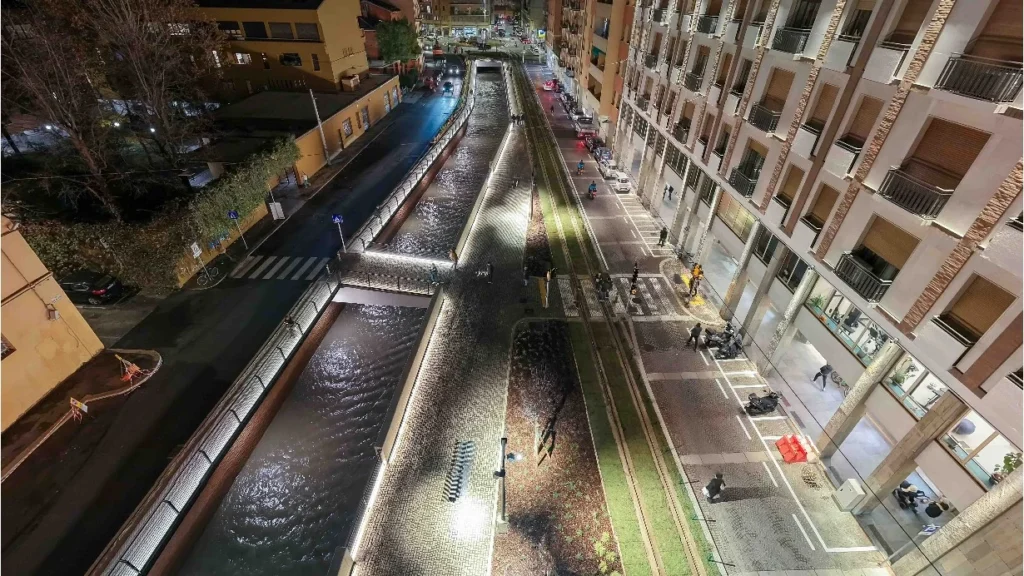
The canal on Via Riva di Reno sees the light of day again after 70 years With the work on the tram’s Red Line now complete, the historic street in the city centre has a new look: no longer an open-air car park, but a new waterside square for residents and tourists. 2 March 2026 | 6 min read After decades flowing hidden beneath the asphalt, the Canale di Reno is once again flowing in the open air in the heart of Bologna. The stretch of Via Riva di Reno between the Piazza Azzarita roundabout and the Church of Santa Maria della Visitazione, following the completion of work on the tram’s Red Line, now has a completely new look: no longer an open-air car park taking up almost the entire roadway, but a new public space where environmental quality, historical identity and sustainable mobility come together. The opening celebration. The street’s new life was celebrated on Saturday 29 November with a public party in the area behind the Church of Santa Maria della Visitazione, where a new pedestrian square overlooking the canal has been created. From 6 PM to 11 PM, the evening’s programme drew inspiration from the themes of water, reflection and flow, elements that tell the story of Bologna and its ancient canal system. At 7, 8 and 9 PM there were three live painting sessions by Majid Bita, with a soundscape by Laura Agnusdei, while the whole evening was accompanied by music from Falana Selecta, aka Micol Fontanella. At the same time, the Opificio delle Acque on Via Monaldo Calari opened its doors from 10 AM to 7 PM, with a free guided tour at 5 PM led by Milena Naldi of Canali di Bologna Cultura. What changes on Via Riva di Reno. The most visible change concerns the relationship between the street and the water. The canal, brought back to light, is now lined by pedestrian walkways along its north side and by a cantilevered boardwalk on its south bank, while a footbridge recalling the old Ponte della Carità provides a crossing. The whole area has been enhanced with 13 new trees – including prunus, ash, oak and maple – which, together with new flowerbeds and green spaces, help improve the environmental quality of one of the busiest streets in the historic centre.The project, which began in spring 2024, also included less visible but essential work for the safety of the area, such as the rebuilding and securing of the cover of the watercourse and its structural walls, in the sections between Via San Felice and the roundabout, up to Via Ugo Lenzi, and near the Church, including the junction with Via delle Lame. Designed for soft mobility, the area will be crossed by the tram’s Red Line, which here will run outbound on a single track – grassed over for a long stretch – from Via delle Lame to Via San Felice. As in the rest of the historic centre, the tram will run on battery power along this stretch, with no overhead lines, so as to blend as harmoniously as possible into the historic setting. A 70-year story. For the people of Bologna, this is not just an urban regeneration project, but the return of a piece of the city’s history. The canal was covered over in 1957, turning Via Riva di Reno into one of the most important – but also most congested – roads in the historic centre. Its reopening, after 70 years, gives the city back a view reminiscent of the network of navigable canals that, since the Middle Ages, connected Bologna to the Reno river and, from there, to the Po. A guide for residents and shopkeepers. To help citizens, residents and businesses live day to day alongside the newly uncovered canal, the Consorzio Canali di Bologna, with the support of Ascom, has produced a mini-guide designed to dispel doubts and misconceptions about the nature of the water. The guide explains, for example, that the brown colour of the water is not a sign of pollution: since it comes from the Reno river, the canal water is never crystal clear because of the clay soil of the Bologna area, and the colour is caused by silt and debris carried along during floods. Likewise, the guide explains that the periods when the canal appears dry are not a sign of a fault, but correspond to scheduled procedures related to hydraulic safety and maintenance of the system. The Consorzio has also opened applications for shops and businesses on Via della Grada, Via Riva di Reno and Via Righi wishing to become official distribution points for the guide, helping to spread accurate information among residents and visitors about a complex historic infrastructure that is often looked at but not always understood. Mixed reactions, but a new identity for the neighbourhood. As is often the case with major urban transformations, reactions from the public – and especially from those who live in the area – are mixed. On the one hand, some see the new layout as an opportunity for business and tourism, thanks to a larger, more open and more liveable public space. On the other, some regret the loss of parking spaces and fear the area could return to the decay that marked it in the 19th century, when the canal, stripped of its traditional functions, had become a foul-smelling sewer.The fact remains that Via Riva di Reno today presents itself as “a large, open and accessible place, designed to become a meeting point and social hub for residents and visitors”, as the City of Bologna described it. A water square in the heart of the city which, helped by the boom in urban tourism in recent years, aims to become one of the new “hidden” stops on the journey to discover the Bologna that flows, quite literally, beneath its visitors’ feet. Sources: City of Bologna – Tram Bologna, “Ecco la nuova via Riva Reno a conclusione dei lavori di riqualificazione

The Canal on Via Riva di Reno Reopens Read More »